Sembabule-Experts have warned livestock farmers in the country against the practice of milking and slaughtering sick animals, especially those undergoing treatment, saying this puts the lives of those who consume these products at risk.
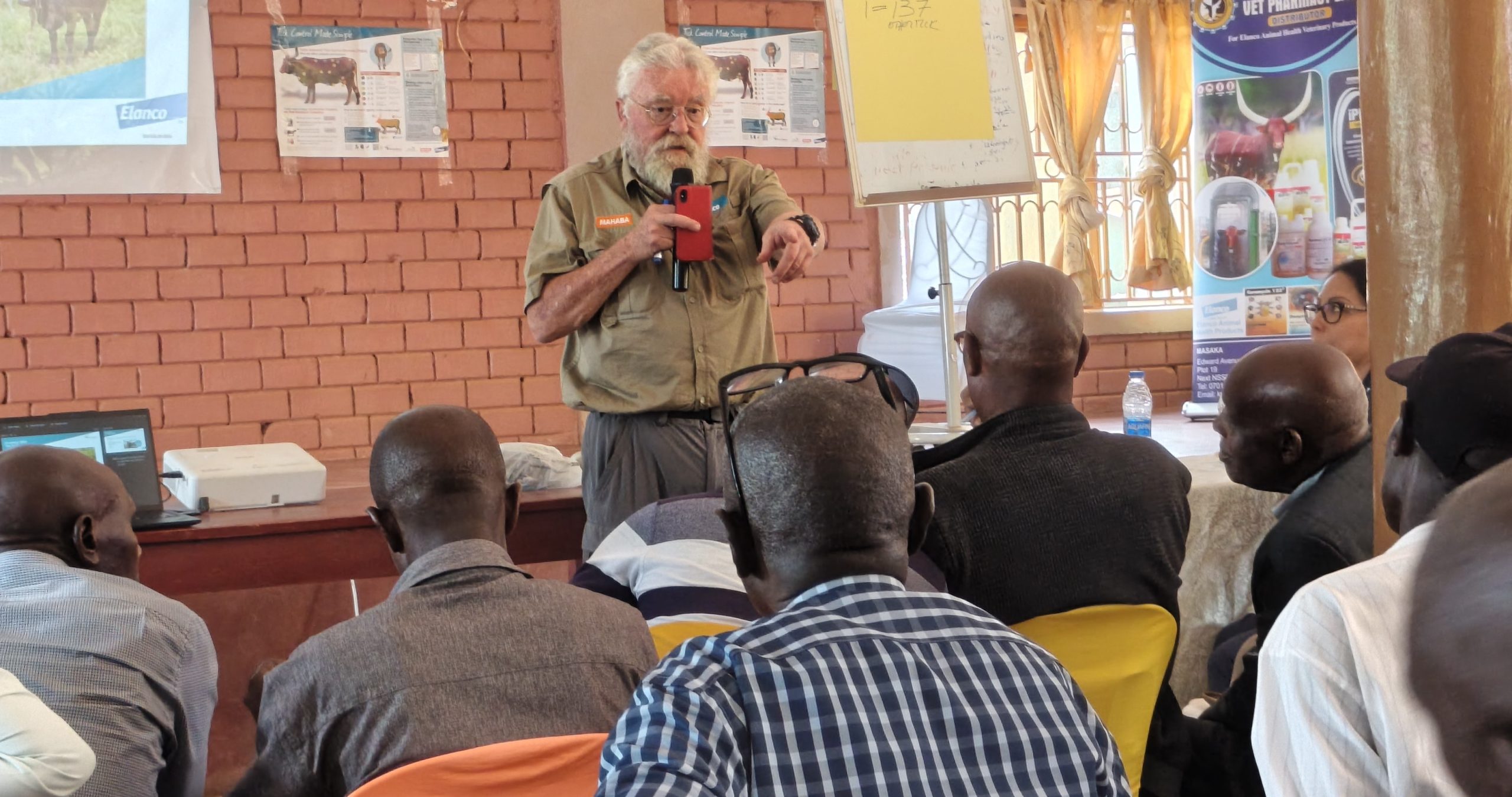
The warning was issued by Sembabule District Veterinary Officer Dr. Angello Ssali, was speaking at a Tick Control Made Simple farmers’ training at Rainbow Motel in Sembabule Town Council on Thursday.
The training was organized by South African pharmaceutical manufacturer Elanco, as well as Ugandan distributor Kwewaayo (U) Veterinary Pharmacy Limited, to train farmers on how to prevent and control ticks at their farms, as well as proper arcaricide use.
Dr. Ssali said there are people who have the habit of milking or slaughtering cows while they are undergoing treatment which makes the milk or meat harmful to the consumers.
“Every type of medicine has a withdrawal period but most of the acaricides we use in meat treatment should not be taken within 4 to 7 days, the same for milk, you should not consume the milk before a week elapses”, he said.
During the meeting, raised concerns of counterfeit acaricides that have flooded the country’s market which has led farmers turn to using crop pesticides such as tomatoes to treat their animals especially cattle.

However, Dr. Julius Tuhumwire, a sales executive for Kwewaayo Uganda Vet Pharmacy in Uganda, said if farmers follow the proper use of acaricides as guided by extension officers, ticks can be controlled using the readily available products on the market.
His idea was supported by Dr. Angello Ssali who informed the participants about the government’s intention of enrolling vaccination of livestock in addition to the available ventures of tick control and prevention.
Speaking on the sidelines of the training, some of the participants gave mixed reactions on the impact of the engagement in sterilizing ticks.
Ticks and the diseases they transmit impose a substantial economic burden on livestock production with the country losing about Shs.4 trillion every year.
According to Dr. Roaland Jooste from veterinary pharmaceutical company Elanca, ticks are so successful in Uganda because of their exceptional reproductive capacity with one tick laying between 1,000 and 27,000 at a time basing on a specific specie and cattle resistance to ticks.

By Nashumbusha Joshua.